

The European Commission has formally recognised heart failure in its Safe Hearts Plan, marking a significant milestone for cardiovascular policy.
The plan takes an important step towards strengthening action on cardiovascular disease (CVD) by explicitly acknowledging the need to prevent heart failure and improve early detection, alongside broader efforts to strengthen cardiovascular health across Europe. This major advance follows sustained advocacy by our community through the European Heart Failure Mission campaign.
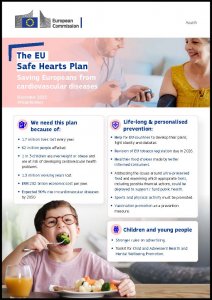
The plan includes three explicit references to heart failure, signalling growing recognition of its importance in the CVD landscape. Heart failure’s inclusion was far from guaranteed, and this progress reflects what the heart failure community can achieve.
Heart failure had been removed from the definition of CVD in a pre‑final draft. Its reinstatement in the final plan has set an important marker for future policy discussions:
“Cardiovascular diseases affect the heart and blood vessels. They include heart attacks, stroke, heart failure, ischaemic heart diseases, abnormal heart rhythms, structural heart diseases, cardiomyopathy and congenital heart diseases.” (p. 1)
In Pillar 2: Early Detection and Screening of Those at Risk, the plan recognises that next‑generation cardiovascular screening must go beyond traditional risk factors and explicitly include early detection of heart failure risk:
“In addition to traditional screening areas, detection of kidney disease, and congenital conditions such as elevated lipoprotein(a)…as well as early detection of heart failure risk… should also be included in the scope of the screening.” (p. 16)
We are also encouraged to see kidney disease included alongside heart failure, reflecting the importance of an integrated approach to cardio-renal-metabolic conditions and multimorbidity.
In Pillar 3: Living with Cardiovascular Disease, the plan emphasises the importance of high‑quality, coordinated and patient‑centred care. It highlights the potential of integrated care models to improve quality of life and reduce unplanned admissions, with specific reference to heart failure:
“Integrated care models in primary care and community settings can… reduce unplanned hospital admissions and improve quality of life while saving costs… It is also possible to enhance and roll out innovative ICT‑enabled integrated care solutions tailored specifically to advance multi‑disciplinary health and care for patients with chronic heart failure.” (p. 19)
This achievement reflects the collective effort of the heart failure community and the strong engagement built with key members of EU institutions. We welcome the direction set out in the Safe Hearts Plan and remain committed to supporting the next phase of delivery.
Council Recommendations, health checks and screening protocols in 2026, followed by a likely shift towards person‑centred care and implementation from 2027 onwards, will be critical for shaping real‑world impact.
For the heart failure community, this includes continuing to advocate for:
As attention now turns to implementation, HFPN looks forward to working with EU institutions, Member States, and our members and partners – including the kidney and diabetes communities – to help ensure the plan tangibly improves the lives of people living with heart failure.